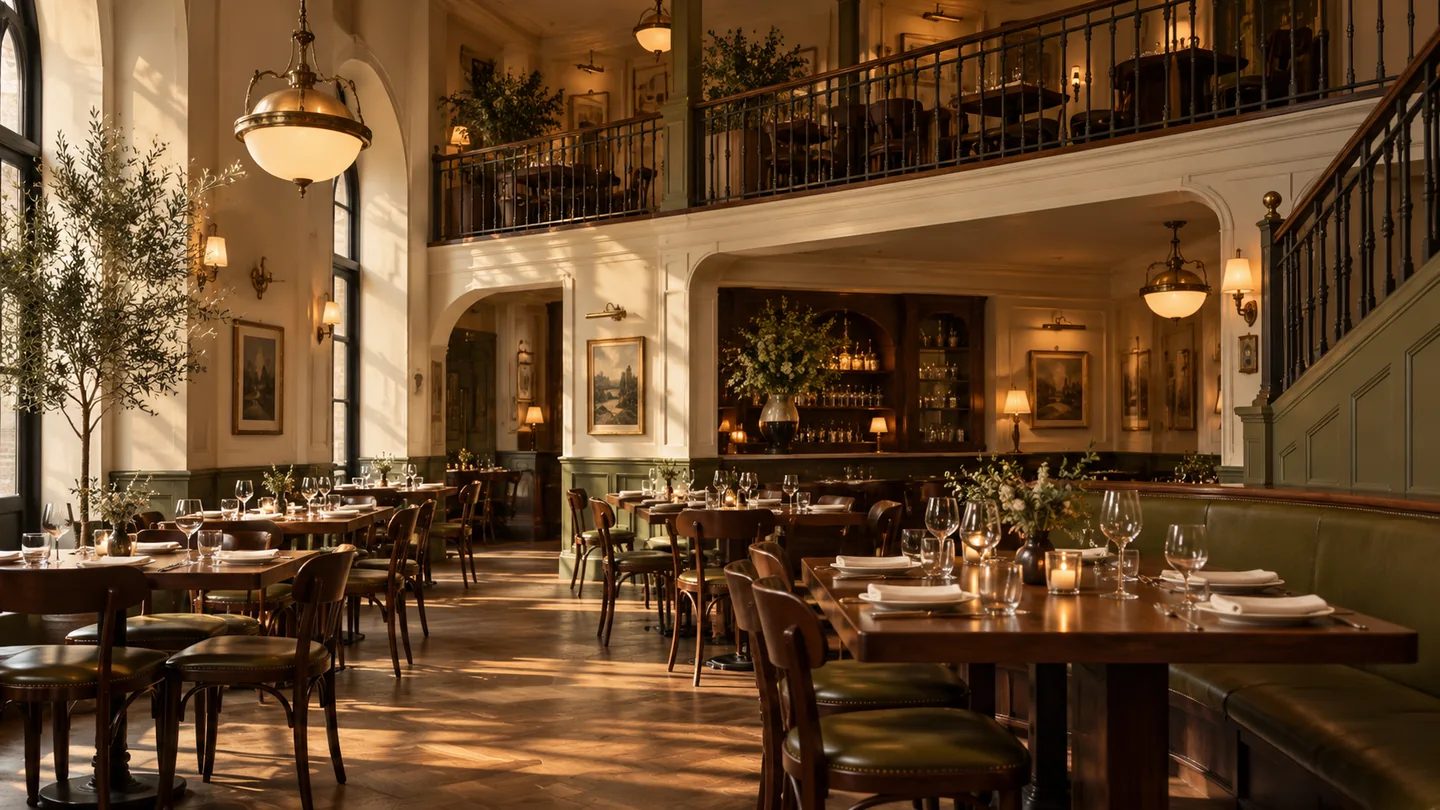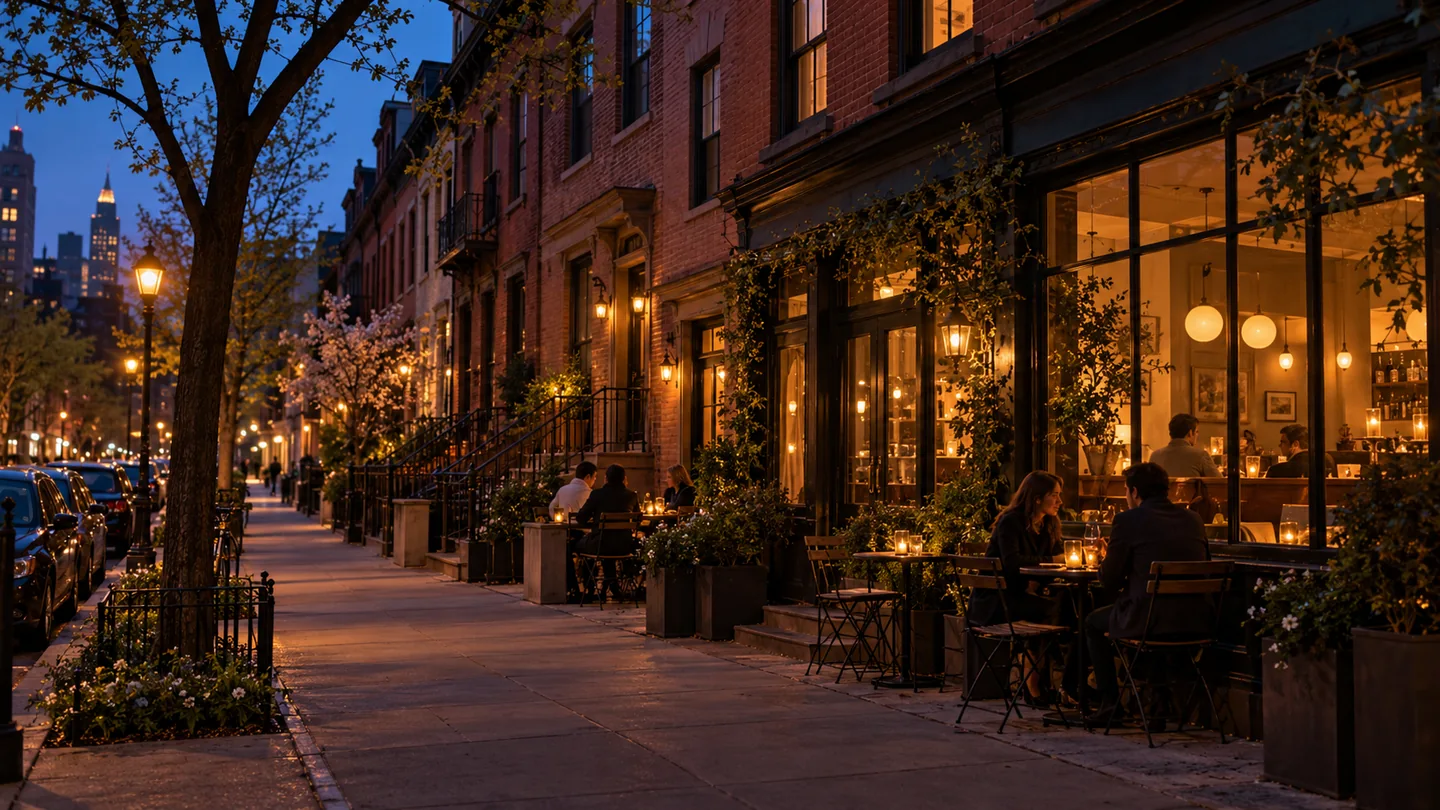
Greenwich Village offers a compelling model for a neighborhood restaurant because its cultural identity joins everyday street life with art, conversation, and social change. Its influence is better understood as a set of hospitality ideas than a single menu or decorating style. A room can borrow the mood of a Village café without reproducing the history that made that café possible.
For restaurants elsewhere, the useful question is not how to copy New York. It is how to build a place that belongs to its own neighborhood while welcoming a mix of people and occasions. The connection between cultural setting and a comfortable table helps explain the lasting appeal of the Village reference.
A cultural setting, not a restaurant formula
The National Park Service's Greenwich Village Historic District account describes a neighborhood associated with artists, writers, and activism. That documented context helps explain its broad cultural appeal. It does not show that every café was bohemian, that every restaurant welcomed every group equally, or that one model spread unchanged across America.
Restaurants sit within that larger environment. They offer places to pause, talk, eat, and watch the street. A dining room near homes, workspaces, cultural venues, and public gathering places can serve several needs across a day. The atmosphere comes partly from those surroundings, not simply from exposed brick or a jazz playlist.
It is tempting to turn that observation into a sweeping origin story for the American neighborhood restaurant. The evidence does not support doing so. Taverns, cafés, diners, immigrant businesses, and family restaurants developed through many regional histories. Greenwich Village is one influential reference among them, not their universal birthplace.
The room as an invitation to stay
At its best, neighborhood hospitality gives a guest choices. A small table can support a quiet meal; a counter or bar can make solo dining feel ordinary; a larger table can accommodate a gathering. Those possibilities create social flexibility without requiring every guest to participate in the same kind of evening.
Furniture helps, but service makes the arrangement work. A server who explains whether food is ordered at the table, whether a seat is reserved, or how long the kitchen remains open removes uncertainty. Such clarity can make a new arrival feel less like an outsider who needs to know unwritten rules.
Comfort also depends on ordinary details: room to move between chairs, a place for a coat, enough light to read a menu, and sound levels that permit conversation. Our essay on the neighborhood bar and grill examines how these practical qualities shape an American dining room.
Familiar food can leave room for discovery
A neighborhood menu needs some degree of legibility. Guests should be able to identify a quick meal, a substantial dinner, and a dish that suits their appetite without decoding every description. Familiar categories can provide that structure even when the cooking draws from several traditions.
Discovery need not mean theatrical presentation. A seasonal vegetable, an unfamiliar preparation explained in a sentence, or a different accompaniment can make a repeat visit interesting. The balance lies between the dependable dish that brings someone back and the smaller change that gives the kitchen a voice.
This is an editorial account of menu design, not a claim that Greenwich Village restaurants all use the same approach. The district has many restaurant identities. Its value as a reference is the possibility of varied experiences within a recognizable neighborhood setting.
What travels well beyond Manhattan
Some hospitality ideas can travel: a clear welcome, a flexible room, an approachable menu, and a reason to return on an ordinary evening. Others depend heavily on the location. A storefront connected to a walkable street has different arrival patterns from a restaurant whose guests mostly reach it by car.
That difference matters in Southern California. Transportation can shape when people arrive, whether a group comes together, and how long they plan to stay. A restaurant inspired by a New York neighborhood still has to answer local questions about entrances, pickup, accessibility, and the trip home.
The historical Bleecker Street restaurant in Tarzana provides a useful subject for this discussion. Its reported Village-inspired identity can be explored as a concept, while its documented business record remains separate. We do not infer an operator's precise intentions from the name alone.
When an atmosphere becomes a costume
A themed room can communicate its idea quickly. Yet a dining experience becomes thin if every detail points to an imagined elsewhere while ignoring the guest in front of it. Dim lighting may look nostalgic but make a menu hard to read. Loud music may suggest energy while preventing a family conversation.
The more useful translation begins with function. If the aim is a sociable room, give people seating options and audible conversation. If the aim is an unhurried dinner, explain pacing and booking limits honestly. Decorative references can support those choices, but they cannot perform the work themselves.
Likewise, nostalgia deserves care. The past was not uniformly welcoming, affordable, or easy. Celebrating neighborhood culture need not erase exclusion or change. A thoughtful restaurant can draw inspiration from a place while allowing its present community to define what belonging should mean.
A local identity cannot be imported whole
The most convincing neighborhood restaurant becomes recognizable through repeated, ordinary use. Guests learn what suits a short lunch, a solo dinner, or a conversation with friends. Staff learn how to communicate the restaurant's boundaries without making them feel arbitrary. The room develops meaning through those exchanges.
Greenwich Village remains a strong cultural reference because it suggests a relationship between people, streets, and places to gather. Restaurants elsewhere can take that relationship seriously without reproducing its imagery. The lasting lesson is to make a dining room responsive to the life around it, then let the neighborhood give that room its own character.